

Karen Rundlet, CEO and executive director of the Institute for Nonprofit News (INN), discusses the increasing importance of philanthropy in sustaining local journalism. She shares insights from her time at Knight Foundation, where she helped launch initiatives like NewsMatch and Press Forward, and explores how nonprofit newsrooms can diversify revenue streams to build sustainable operations. Rundlet emphasizes that supporting an informed public, not just journalism, is critical in today’s landscape.
She also highlights the role of local news in fostering community connection, touching on how INN members are covering vital issues like municipal government, education and culture. Rundlet discusses the importance of engaging local funders and ensuring that newsrooms help solve community problems by being transparent, impactful and connected.
Rundlet reflects on the future of local news, from addressing news avoidance to ensuring transparency in funding. She explores how organizations can focus on accountability, co-design content with their communities and maintain mental health and sustainability for both leaders and journalists.
Episode chapters:
(00:02:21) – Reflections on Knight Foundation, NewsMatch and fundraising in local news
(00:11:30) – Engaging local funders and the role of local news in community building
(00:16:51) – It’s not “save journalism.” Save an informed public.
(00:25:31) – The role of support organizations in strengthening news ecosystems
(00:30:14) – Operating support, transparency and other issues in funding
(00:36:17) – Addressing news avoidance and making news useful
(00:38:57) – Rapid-fire questions
(00:50:33) – Media and local recommendations
Listen to the episode here:
Links:
- Karen Rundlet: Linkedln,Twitter/X
- Institute for Nonprofit News
- Mentioned
- Local recommendations
- Pérez Art Museum Miami
- B & M Market
- Cuban coffee
- Media recommendations
- Local News Matters: web, Twitter, Facebook, LinkedIn
- Pirate Audio
- Colorado Press Association: web, Twitter, Facebook
- Tim Regan-Porter: bio, Twitter
Bio:
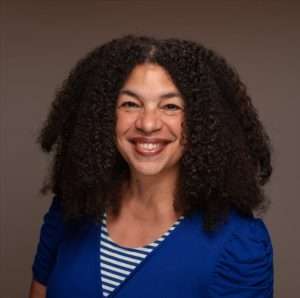 Karen Rundlet is the CEO/Executive Director of the Institute for Nonprofit News (INN) The Institute supports 450 independent news organizations that make up the INN Network, setting standards and best practices for philanthropy in news and advancing the innovation, business reinvention and equitable approaches reshaping the news field. She previously served as Senior Director at the Knight Foundation, where she managed a more than $50 million portfolio of grants. Previously, Rundlet reported, produced and managed projects for the Miami Herald, WNBC, and WLRN. She, her husband, Alex, and daughter live in Miami, where she grew up after her family emigrated from Jamaica. She serves on the board of AIRIE (Artists in Residence in the Everglades) and is a longtime Ambassador for the Black Art Fund at the Perez Art Museum in Miami.
Full transcript:
(recorded via Riverside.fm; transcript automated via Castmagic.io, mostly unedited)
KAREN RUNDLET [00:00:00]:More funders need to come in, but also more ideas need to come in and more solutions need to come in. And it doesn’t just have to be a journalism solution to bring in more dollars. I think there are other levers and there are other leaders that are going to show up and other initiatives that are gonna show up in these next five years to bring more heft to this save—it’s actually not “save journalism.” It’s to save an informed public. It’s save a public informed by facts. That’s really what it is. So make sure that we’re living with facts and data. We’re not just living with emotion and misinformation and, you know, so I think that has to happen.
TIM REGAN-PORTER [00:00:48]: Welcome to the Local News Matters podcast, where we explore pathways to stronger journalism, better businesses, and healthier communities. I’m Tim Regan-Porter, CEO of the Colorado Press Association.
This episode, I talk with Karen Rundlet, CEO and Executive Director of the Institute for Nonprofit News. Karen joined INN after a notable tenure at the Knight Foundation, where she managed a $50 million portfolio of grants and worked on pivotal initiatives like NewsMatch and Press Forward. We discuss the growing role of philanthropy in local journalism, the need for newsrooms to diversify their revenue streams, and the unique challenges nonprofit news outlets face. Karen shares insights from her time in both journalism and philanthropy, drawing on her experiences at the Miami Herald, WNBC, and WLRN. She emphasizes the importance of creating news that not only informs but also engages and connects communities, especially in a time when local news is under threat.
If you like this episode and what we’re doing more generally, please follow in your favorite podcast app, leave us a five-star review on Apple Podcasts, and tell your friends about us. This is a side project and a labor of love, and your support means a lot. You can find past episodes, full transcripts, and relevant links, and sign up for our newsletter at localnewsmatterspodcast.com, or for lazy typists like me at lnmpod.com. You also follow us on most social media channels @lnmpod.
And now I bring you Karen Rundlet.
KAREN RUNDLET [00:02:19]: Thank you so much, Tim.
Reflections on Knight Foundation, NewsMatch and fundraising in local news
TIM REGAN-PORTER [00:02:21]: So you are now at, INN, the Institute For Nonprofit News, and you left Knight Foundation to go there. And so I wanna kinda make this a little bit of an exit interview, looking back over your time at Knight and what you’ve learned and advice you have for others and what you’re carrying into INN. Let’s start with your time at Knight focused on something that’s very relevant to your members, and that is NewsMatch and then Press Forward. I know you spent time working on both of those initiatives, which, you know, they’re all about fundraising, not always nonprofits, but trying to get more philanthropy and individual donors into the ecosystem. Looking back on NewsMatch, which has grown quite a bit since it was started, and then, you know, the new initiative on Press Forward, what are the key lessons you take away from that from a funder perspective and also from a newsroom? I know that’s a lot, but…
KAREN RUNDLET [00:03:24]: NewsMatch is a campaign. Press Forward is a campaign. NewsMatch, though, comes with tools, resources, training, and some money and then members turned around and took that money that they were trying to match and had a conversation with the community. Why the work is important, why it’s of value, how it solves a problem for your community, how it solves a problem for your life and then and it takes money to do this kind of work and so that’s what NewsMatch is. And Press Forward is also a campaign. There is this number, half a billion dollars over the next five years. Press Forward is a campaign, and it’s funders talking to other funders. It’s funders saying, join us in supporting this work, and they’re gonna support many things.
TIM REGAN-PORTER [00:04:13]: We’ve had quite a few people on the podcast talking about philanthropy, and I’m quite confident you would agree that philanthropy has an important role to play. And whether that’s, you know, foundation giving or large donors or even smaller membership, which, you know, not really philanthropy. But it’s not gonna solve all of our problems. But, you know, it’s a key component. What do you—what is your hope? And now, you know, you’re working with nonprofit newsrooms all over the country. How should newsrooms think about the availability of these funds, the increased availability of these funds? And how do they leverage that to really build an organization that is sustainable and has real impact in their communities?
KAREN RUNDLET [00:04:59]: I don’t think the answer is going to surprise you. I think that you have to diversify your revenue streams. I don’t think that’s gonna be any surprise to anyone who’s really taking the business of this work seriously. I think that journalists, if they’re only talking to other journalists, understand the value of this work, see the value of this work, know what kind of impact it has, but we’re we’re building a case to philanthropy. I worked at Knight Foundation for eight years. I remember when I was getting calls, the local newspaper in town is gonna be bought by a questionable owner or the local newspaper in town, they’re just cutting staff left and right and communities were concerned. That was, those were the initial calls that I got in my eight years there. It changed over time.
KAREN RUNDLET [00:05:51]: Some people wanted to launch something new. Some people wanted to save the local newspaper. It’s changed some, but some wanted to build something completely different that reflected the community’s voices where the community could actually where neighbors, residents could actually author stories or create videos or create podcasts or lots of different ways that this has really changed over time.
TIM REGAN-PORTER [00:06:16]: You know, one of the things, I was talking with Molly de Aguiar years ago at a conference, and we were talking about philanthropy, long before, you know, Press Forward was on the radar. And one of the one of the discussions we had was shifting mindsets in newsrooms, particularly those who have been doing fundraising from foundations and other programmatic-oriented funders. This is really not just about funding a particular program in perpetuity, funders do not like in perpetuity, but using those dollars to really leverage, you know, what your assets and build, you know, diversifying that revenue. So have you, you know, had experience with really seeing newsrooms do that shift from really, I’ve got a reporting project or I’ve got some other type of project that I wanna fund and not really thinking about how do you make that, leverage it to become a multiple and a sustainable part of your organization?
KAREN RUNDLET [00:07:19]: So look, I think even even the for-profit newspapers, even for-profit television stations, even public media, they have diversified revenue streams. So, you know, one of the things that we’re seeing with these for-profit newspapers is those buildings are being sold for a lot of money. They were also in the real estate business. I think that’s important to note. I think that classified advertising was part of the mix. I think display advertising was part of the mix. I think that we cannot forget that. And what happened was that newspapers used to get a lot of eyeballs for things like the Macy’s coupons, for the crossword puzzles, for the sports reporting.
KAREN RUNDLET [00:08:04]: And when they had a lot of eyeballs, they were able to put investigative reporting in front of those eyeballs as well. I can’t say that every single person read the investigative reporting, but many more did because there were a lot of there was a lot of engagement with the newspaper. And so I think that we’ve sort of forgotten that. You know, the Institute For Nonprofit News started in 2009. It was 27 investigative journalists, really, investigative news outlets that started it. So they built out some, what they called at the time INN was called the Investigative News Network. So the DNA of the organization has always had investigative news in them. But investigative news is very difficult to fund.
KAREN RUNDLET [00:08:46]: I’m not saying that there aren’t people who believe in it, understand it, all of that, but it upsets, it upsets power. It challenges power, and a lot of times power are, you know, the folks who are the advertisers. So I think you have to keep that in mind, and that’s why now we’re turning more to philanthropy.
TIM REGAN-PORTER [00:09:07]: Absolutely. And, you know, part of the disruption in local news and media more generally is a great unbundling. You know, there have been—Ben Thompson who writes a a a blog on technology and media, talks a lot about that unbundling and how some of the larger players, you know, Disney, for example, the smart ones are actually trying to figure out a way to rebundle. And that’s a challenge, I think, for newsrooms, but—and it doesn’t have to just be the large metro chains. I was just talking with the couple in Kansas who started Earn Your Press Pass, and they have a local newspaper there. And they just kinda mentioned casually about this music event that they have going later this summer, that has turned into this big thing. And so even small newsrooms can look at, you know, how do we serve the community and how do we diversify our revenue in ways that I think don’t come naturally for a lot of journalists for sure.
KAREN RUNDLET [00:10:08]: Absolutely. And I do wanna say that, when I was at Knight Foundation, Knight Foundation does fund journalism, but, you know, also funds the arts and also funds different community projects, a lot of work around parks, a lot of work around public spaces generally. And I remember, before the pandemic, I sat next to an art director and she asked me a couple of questions about my work and I was telling her about philanthropy supporting journalism and that’s something that seems to be increasing and this is, you know, this is well before the pandemic. And she said to me, oh, interesting. You know, I fund a lot of museums and what we’re turning to them and saying is what other revenue can you generate? What’s your, what are the for-profit opportunities? And so, you know, museums are running restaurants. They are doing a wedding business. They have a gift shop. So I think it’s important to recognize that too.
TIM REGAN-PORTER [00:11:05]: Absolutely. And I think that’s not divorced from our mission, as local newsrooms and news outlet organizations that, you know, we’re informing the community. We are connecting community. And, you know, arts and culture, food, sports, you know, encompasses all of that. And it doesn’t just have to be about the reporting.
KAREN RUNDLET [00:11:29]: Absolutely.
Engaging local funders and the role of local news in community building
TIM REGAN-PORTER [00:11:30]: You know, as you were working with Press Forward, and I imagine some of this work you’ll certainly be doing with INN or at least helping your members do this work. You know, when you talk to local funders, what is the message? Why should they get involved in their local news ecosystem? When for a lot of them, it’s confusing. It’s sometimes, you know, sometimes they bring these preconceptions about how controversial it might be and the types of reporting newsrooms do. What do you say to really convince community foundations, other local funders that they’re needed and they can really have an impact for the community by jumping in here?
KAREN RUNDLET [00:12:15]: Well, it’s all about what problems local news can solve for the community. So I think there are a couple of things. I think, first of all, INN’s membership, 48% of it is local. So that’s a growing sector, but we have national organizations. You know, we have ProPublica. You know, we have PBS NewsHour. Those are members of the organization, and then there’s single topic news sites as well, like Hechinger Report which reports exclusively on education. But 48% of our membership is local. Okay? And basically, that means kind of three areas that most of them cover.
KAREN RUNDLET [00:12:49]: So it’s municipal government, K through 12 education, and then arts and culture. And arts and culture bind a community, bring us together around music, around food, around a festival. So that’s just bringing us together. And I think, it’s not deep investigative reporting, it’s just connecting people. People aren’t gonna solve problems if they’re not connected in the first place and I think we forget that. We get deep into our work and deep into uncovering something and we think everybody’s just gonna respond to it and solve for it. So I think it’s about binding community. And we are in polarized times, so I think that solves a problem for community. The other thing is different communities are solving different issues.
KAREN RUNDLET [00:13:31]: So it could be affordability, could be affordable housing. It could be, I know that New Mexico In Depth, for instance. Alcohol was the number one cause of death in New Mexico, and they did—that’s one of our members, an INN member. They did, you know, reporting on that made a difference, that, after that, there was an office created to work on alcohol prevention. There was a tax that was increased around alcohol. That was a huge problem in New Mexico. So those are the sorts of impacts you wanna have. I think a couple of things.
KAREN RUNDLET [00:14:06]: I think it’s the issue. You don’t just want people to take the medicine or put on the seat belt. You also want them to be aware of the problem so that they do it. They do it themselves. So I think it’s also about news circulates important information to solve problems. You wanna bring people along to be engaged in your issue. So I think there’s that. I think there is a lot of fear from funders who are concerned about funding the wrong kind of entity.
KAREN RUNDLET [00:14:37]: I, you know, I’m just gonna say for INN, I mean, not everybody gets to be an INN member. We have standards around financial transparency. You know who is funding the organization. Editorial independence, you know, we have a membership committee that is making sure that we know who the funders are, that they, that these entities are actually producing a good percentage of public service journalism, editorial excellence, editorial independence, financial transparency. In 2023, INN was only able to accept 48% of applications. So you know when it’s an INN member, it’s not pink slime, it’s not an organization that’s collecting just press releases, and it’s not an organization where there’s funder interference. So those are the things that INN that I’m saying now about INN and the work that INN does to vet its members.
TIM REGAN-PORTER [00:15:35]: Yeah. That’s a very good point. And I’m curious because this is a question I face in my world of press associations and organizations like CoLab. Do you police? Do you have a mechanism for handling complaints, you know, after members are accepted? Because that’s one thing we’ve struggled with, whether we should even try that.
KAREN RUNDLET [00:15:57]: I can’t say that that has happened in a way, look, I’m five months in. I can’t say that that’s happened in a way that’s been, that I felt it was appropriate for INN to get involved. So that I haven’t quite come up with that yet. I do know that it’s come up in terms of there have been communities where neighbors have reached out and said, this organization, this person actually has a role, like maybe as a lobbyist. It’s not appropriate and they don’t get membership. So, I mean, we do consider those sorts of things at application and people and their organizations that have been told, well, their organizations actually that have tried two and three times to get INN membership. We have declined members and they come back again.
It’s not “save journalism.” Save an informed public.
TIM REGAN-PORTER [00:16:51]: Well, as, you know, as someone who was a funder and played a crucial role in the Press Forward campaign, now at INN and over, you know, a diverse group of nonprofit newsrooms that focus on different scopes, scenarios. From, you know, the high level perspective of that you’ve had and now with your membership, how does—you know, philanthropy is playing an increasing role and, ultimately, to some extent, these organizations are going to be picking winners and losers. And there are so many needs, and philanthropy will never meet that alone, of course. And so, you do have, you know, very worthwhile national nonprofits, and you’ve got verticals, as you mentioned, and you’ve got these local funders, and you’ve got different communities, and you’ve got, you know, publication organizations serving communities of color that are underrepresented, and rural. And then the needs are just so vast. How do you hope or what if you have—what concerns do you have that as philanthropy plays this increasing role that it can shape the news ecosystem in a way that is commensurate with the need, where the needs really are?
KAREN RUNDLET [00:18:07]: I mean, that’s complex. So what I would say is Press Forward as a campaign is louder. It’s bringing more attention and more dollars to local news, and it’s doing that over a five year period. But during that five year period, things have to happen. More funders need to come in, but also more ideas need to come in and more solutions need to come in. And it doesn’t just have to be a journalism solution to bring in more dollars. It might be, I mean, I have heard members, leaders of national organizations, say, when are we gonna sue the platforms? Like I’ve heard that. It could be that that brings in the money.
KAREN RUNDLET [00:18:47]: I’ve heard, let’s create a social impact bond. Like, what’s out there? What financial tool is out there? There are policy solutions that are already, you know, on the table. Rebuild Local News, Free Press, you know, is working on that. So I think there are other levers and there are other leaders that are going to show up and other initiatives that are gonna show up to in these next five years to bring more heft to this save—it’s actually not “save journalism.” It’s save an informed public. It’s save a public informed by facts. That’s really what it is. So make sure that we’re living with facts and data.
KAREN RUNDLET [00:19:30]: We’re not just living with emotion and misinformation and, you know, so I think that has to happen and that’s, you know, the Press Forward is also buying time. It’s buying five years of time. So I think that’s part of what’s going on there.
TIM REGAN-PORTER [00:19:46]: I’m glad you brought up the save journalism. That’s really not it. It’s community. So just yesterday, we had someone who works with organizations in Colorado who, you know, are trying to affect legislative change. And then he was talking to a group of ecosystem builders. And he said, look, if your message is put some money aside for us to save some jobs, you’re not gonna get any traction, particularly in a state like Colorado that is constrained by the constitution, by constitutional amendment, on spending. And so you’re going up against health care and childcare and all sorts of worthy causes. And if the message is save journalism and save our jobs, we’re gonna lose that.
TIM REGAN-PORTER [00:20:30]: But if it’s about the community and their informational health and all the things that, you know, plays into health care and crime and safety and childcare and all of these things, that without solid journalism, healthy local news, it’s the community that suffers. And this really shouldn’t be about us. It should be about their needs.
KAREN RUNDLET [00:20:54]: I agree 100%. And look, I think that’s even my own personal DNA having spent eight years at Knight. I mean, it was always about informed and engaged communities. That was the mission of Knight. And I think that the Institute For Nonprofit News and press associations were built out of folks doing that work. But also, too, the future is, presents all sorts of opportunities and challenges. And we have to be future proofed, you know, we have to be ready to engage with the future that’s coming. You know, it was a pretty provocative but, you know, also pretty basic question that came to me yesterday. You know, Karen, what do you see, the future of informed communities being in 10 years? Right? Okay.
KAREN RUNDLET [00:21:40]: And then after that, someone said to me, you know, so the 13 year old of today is gonna be 23 then, and that 23 year old is going to be perhaps working as a journalist. I mean, I have a daughter who’s 15 years old. Okay? She already knows red, yellow and green. Red, you can’t use AI for this area of study at school. Yellow, you can use it for this portion of your assignments. Green, you can use it freely. She already knows that. That’s just, like, part of her education.
KAREN RUNDLET [00:22:13]: She’s on TikTok. She, you know, is looking at videos. That’s where Gen Z is. You know? What are they thinking when she—I remember when she came to me one morning, I’ve told this story before, and she said, mom, there was a Taylor Swift concert, and the fans were so wild and so happy that they caused seismic activity. And I was like, who’s your source? And she’s like, I saw it on TikTok. And I said, who’s your source? And she’s like the news. And I said, let me see that. And then I grabbed the phone and, there’s an anchor desk, and I saw, like, an ABC logo.
KAREN RUNDLET [00:22:49]: And I still didn’t totally believe it, and I went and I looked up my own sources. And I saw the BBC reporting it, and I was like, okay. Alright. You know, she schooled me.
TIM REGAN-PORTER [00:22:59]: Yeah. And what’s happened with news and local news as well, and I think national news has gotten this a little harder. I think it’s just part of the broader trend of loss of faith in institutions. And how do we begin to combat that? Do you have any thoughts? I mean, you know, we don’t show our work very well. We don’t talk about ourselves. And so, I think part of it is that, just like in your example, a lot of the public doesn’t understand what we put into fact checking an article with a reporting that actually goes into it and can’t differentiate between a crazy uncle spouting something on Facebook or, you know, an activist putting out a TikTok video, or someone just reporting on a rumor. And so how do you think about what newsrooms should do to help people understand what acts of journalism are versus rumors and opinions?
KAREN RUNDLET [00:23:51]: Sure. I think we have to talk about the process and the work more in the content, around the content. I mean, I’ve certainly seen in the last decade what about-us pages look very different, but I’ve also seen I’ve also seen advertising about the product. This is the work that we do. This is what it takes to do this work. This is why we need to be compensated for this work. This is why your donations matter. I’ve certainly seen much more of that.
KAREN RUNDLET [00:24:21]: I’ve listened to podcasts where at the end, they say fact check by. So I think there is an increase in language and the telling of what we do. I think that’s really critical. I would say also too, I hear the words accountability a lot more and I hear the words transparency a lot more, not necessarily just around journalism, just sort of in general on social media, different generations, talk about being transparent, talk about holding different cultural figures sometimes accountable. So I think, it’s about staying modern with what the values are and also reminding everyone what our values are. You know, I specifically just said that, you know, if you support an INN member, you know who funds them because that’s one of our values, that’s one of our standards. You have to be financially transparent. You know, and it’s a membership committee. It’s members that are studying the 990s and counting stories and making sure, so it’s member driven.
The role of support organizations in strengthening news ecosystems
TIM REGAN-PORTER [00:25:31]: You know, you mentioned INN and press associations earlier. The support organizations, the backbone builders, you know, particularly as national funders, you know, are upping their funding. How do you think about, you know, the role of our organizations? And, you know, yours and mine do very different things, but I think similar goals in many cases, in many respects. How do you think about what our role is, what our responsibilities are, and how maybe even how funders might think about the importance of shared services and support organizations more generally.
KAREN RUNDLET [00:26:06]: You know, Tim, I’m five months in, and I’ve really been thinking a lot about what is for members and what is for the field. And sometimes those sit a bit in conflict because there is a larger field beyond INN members, and they’re also brilliant INN members. So, but when you’re part of a membership organization, you’re thinking, how does this help my business? How does this help my work? You’re thinking very individually, and we have to think about the individual organization as well as about the collective. So, I mean, I’ll just say for instance, we run a leadership program. Okay? And, it’s a really solid leadership program, but it’s not for 450-plus members. It’s a smaller group of people who get to participate in that. So if you don’t participate in that, you don’t even know that’s valuable and you’re like, what is INN doing for me? So I will point to two products that I think are really exceptional and we’ve already spoken about NewsMatch. I think NewsMatch is very strong and I think NewsMatch has shifted over time.
KAREN RUNDLET [00:27:14]: We pay attention to trends. NewsMatch used to be in the first round of it. It was, here’s some training, here’s some resources, here’s some tools. If you raise this much money, we will match it up to this point. And so that’s what it was. But then in time, we saw that members were saying, oh, wait a minute. I’m gonna go to the local community foundation. I’m gonna get a local match on top of the money I raised from individual donors.
KAREN RUNDLET [00:27:44]: And so we started to see the local match trend line go higher and higher. And so we shifted the strategy. There was now like a bonus if you got a local match. So a trend that we saw, we tried to accelerate it. That’s what we always do with NewsMatch. So NewsMatch ended up serving quite a few individual organizations. It was really I would say that’s that’s a product that was really for members, but it has also really been good for the field and so many folks are understanding the value of a match, understanding the value of the conversation around what you do, why it’s a value, what problems you solve for community. So I think all of that’s really important.
KAREN RUNDLET [00:28:30]: Something else that we do, the INN index. What is that? It’s a whole lot of research. It’s a whole lot of data. It’s a really strong product. It names the field. It says, guess what? There are nonprofit organizations reporting and producing journalism and doing community engagement and community building and doing investigative reporting and video and podcasts and all kinds of things. And it says their operating budgets. It says all sorts of things.
KAREN RUNDLET [00:29:00]: It says how many staff they have on average, where they are, it says all sorts of things. So that is a product that academics are gonna read, that funders are gonna read before they dive into all this. But the other thing is there’s a lot of data in there that’s good for members if they read it. There’s benchmarking data in there to say, okay, right now I’m at this place, I can get healthier. So you can also ask the index for information. So that maybe was a field building product initially and now members are realizing, oh, I can pull this data and say, I have peers in the state of California, this many other peers. You know, they can see the trends themselves. Membership organizations, and you know this, you do things for members, right? But also, members can come to your events, find each other and self organize.
KAREN RUNDLET [00:29:58]: We’re cool with that. We can’t solve every problem. It’s you know, there’s always gonna be a lot of need and we only have so many people, so many hours in a day. We have to be strategic with our resources as well.
Operating support, transparency and other issues in funding
TIM REGAN-PORTER [00:30:14]: Let me shift a little bit. You know, one of the things I also appreciated about the Knight journalism team, certainly, not only anytime you and I talked, but when I heard you speak at different gatherings and same with Duc and Jim and Shazna, is the openness, you know, that team had because, you know, every organization has its critics. And as the largest foundation really focused on journalism, you know, Knight had its critics. And, you know, philanthropy is a complicated beast, and with a complicated relationship to the ecosystem and people just kind of wanting help, wanting money, wanting advice. You know, and there are all sorts of issues that come up with, you know, equity and diversity and decision making. Now that you’ve had, you know, a few months to give it a little distance from that, and now you’re kind of on the other side of it working in, you know, with the newsrooms, how do you—what do you reflect on and as you think back about what went well, what maybe you hope philanthropy can improve upon, particularly large foundations like Knight, as we move into, you know, a new era?
KAREN RUNDLET [00:31:47]: I think that Knight was very specific in how it was funded. And, you know, it wasn’t just general operating support, so I’m seeing other funders do that, and I’m trying to understand that better and how it is better for organizations. I think that there’s a lot that Knight does in terms of building out those budgets. It’s very, very specific, and there’s some very good things that I think Knight did. I think emphasizing the business model was a really good thing. I do. I think that, you know, this financial sustainability piece because most other funders are coming at it in an issue-based kind of way, like I’m interested in education. And I think the thing about funding the business model too is you’re not weighing in on content. And so if you’re not weighing in on content, you’re definitely not influencing the editorial product.
KAREN RUNDLET [00:32:47]: So I think there’s a genius to that. But I am seeing general operating support, that’s something that Knight didn’t do. They’re, you know, under new leadership now, so, you know, we’ll see how things change over time. I think that philanthropy can move slowly. I think expediting it, and there is a lot of demand and there, boy, your inbox is full and boy, there are a lot of requests for conversations. I actually—Knight was pretty much open for business a lot and we were on planes a lot and we were, you know, in the community a lot. You know, sometimes folks would say that philanthropy hasn’t spoken to us, but I know I certainly went to a lot of journalism conferences and I can certainly say that the Knight team did. And most everyone that I worked with, you mentioned Shazna, Nessa, and Jim Brady, and Duc Luu, and Marc Lavallee, you know, all worked in newsrooms. LaSharah Bunting, Paul Chung, all worked in newsrooms, Jennifer Preston. So we’re definitely in touch with the community and in touch with journalists. So I think that’s really important as well.
TIM REGAN-PORTER [00:33:54]: One of the things I appreciated about Knight was that, I was actually was telling Jim Brady this, not just in journalism, but there’s a lot of philanthropy that is content to just keep using their fund to pay out to, you know, existing grantees and not push the industry forward. And I think Knight’s been particularly diligent in not doing the same thing and trying to make sure that, you know, the funding has maximal impact. And, you know, it’s a challenge. And I think newsrooms need to realize, you know, it’s that old analogy about you’ve got a bucket that’s leaking and you just want more water in the bucket. But, you know, at some point, you need to plug that hole. And so really figuring out, you know, in an industry that’s been disrupted so many times—and AI is going to create its own new disruption—that focusing on the business model and the audience that you’re serving and, you know, broadening that or better serving them, that these are key. And we can’t just, we can’t just fill you know, pour more water in the bucket because there’s a need. We gotta look at the, you know, the transformational aspect of it.
KAREN RUNDLET [00:35:07]: Yes. Absolutely. I do wanna say too that I think that it’s important that philanthropy generally be clear on what the process is. And different foundations operate in different ways, so it’s hard for me to say who is clear and who isn’t. I don’t have a list in front of me of every single foundation, nor am I necessarily familiar with their processes, but when the application deadline is, when you’ll hear what is going to get funded, what is not going to get funded. I think that if I applied to a magnet school for my daughter, I know when the application deadline is. I know when I’ll find out. I don’t always know why she was or she wasn’t accepted, but I at least know when and here’s the application and when I’ll hereby. I think the same for college. I’m not saying these are perfect, but I think that is something that would be helpful to the field and it also builds trust because it’s just a clear process. So that’s the thing that I would say.
Addressing news avoidance and making news useful
TIM REGAN-PORTER [00:36:17]: Absolutely. One of the things you talked about, I think, early on in your tenure at INN was news avoidance. And I’m hearing a little more about it, but I don’t think we talk about it as much as we should be. You know, I think particularly in an election year like we have this year, that problem is just gonna grow, because of polarization, because of, you know, the heightened sense ironically, the heightened sense of its importance makes a lot of people just wanna turn off at some point because it’s too much. And even though a lot of that’s happening at the national level, it filters down. How do you think newsrooms should think about tackling that problem?
KAREN RUNDLET [00:36:58]: So I think news has to be useful. I think that’s so much of it, and I think it has to be valuable, and I think it has to solve problems. And I know that sounds really, really, really basic. I think there is, I think investigative news solves problems, but it’s not necessarily always useful. It’s important that it’s reported, but to the everyday person, it’s not necessarily useful. It is for a set of change makers, for a set of stakeholders, oftentimes, who can move the needle and fix something. So I think, you know, it’s back to kind of what we were saying before about why people came to newspapers, why people came to television newscasts or it’s about giving people something they need and they want and that is, that potentially delights them and then solving problems for them. So that’s a lot of what it is.
KAREN RUNDLET [00:38:01]: I think that people also come to these civic issues after they’ve been delighted by the community. I mean, look, they’re all—I live in Miami. There are all sorts of folks who have moved to Miami since the pandemic. And they talk about the low taxes and they talk about the great weather and they’re, you know, they’re not talking about the cost of living or how housing has— they come here delighted. Are the question is, are they gonna stay and dig in and solve some of our climate issues together? Are we you know, are they gonna stick around? So I think it’s a lot about that. It’s about bringing people to something that is engaging and valuable, and then delivering news to them and finding ways to engage people differently around these issues.
Rapid-fire questions
TIM REGAN-PORTER [00:38:57]: And now I’d like to move into the rapid-fire section. So my questions will be quick, but your answers don’t have to be. And I may even ask you to elaborate on some. So, compared to a year ago, are you more or less optimistic about the future of local news and why?
KAREN RUNDLET [00:39:14]: Oh, definitely more. Absolutely. I do believe that there’s more attention around this, and I think that journalism needs partners outside of journalism to solve these problems. And I think we’re getting there.
TIM REGAN-PORTER [00:39:29]: Does AI fill you with more hope or dread when it comes to journalism?
KAREN RUNDLET [00:39:34]: Probably dread. Yeah. Probably dread. I think there are opportunities, certainly. But I think it’s gonna be a lot of experimenting and hits and misses before we sort of settle down into a normal.
TIM REGAN-PORTER [00:39:53]: Messy desk or clean desk?
KAREN RUNDLET [00:39:55]: Clean desk.
TIM REGAN-PORTER [00:39:56]: What about your digital life? Computer desktop, things like that.
KAREN RUNDLET [00:40:01]: There’s stuff on the desktop. Try not to keep too many tabs open. I’m not a zero tab person, though. I’m not, I’m not that. And, inbox. Oh, no. Let’s not speak about that. Of course, it’s quite a bit reduced since the Knight days.
KAREN RUNDLET [00:40:16]: I’m not as popular as I used to be.
TIM REGAN-PORTER [00:40:18]: What’s the best single piece of advice you’ve been given or that you like to give?
KAREN RUNDLET [00:40:23]: Look outside your sector for someone doing something similar. There are a lot of best practices there. I think there are, you know, similar sectors to journalism that are doing great civic things and have, like, cool things going on. And so I would say that. Life advice, I mean, you know, a lot of times when I, you know, I wish people laughter. I really do because there are a lot of hard things in this world, and I wish people the sense of humor to make it through a lot of them. So I often say, it’s not just that I wish you well. I hope your day is full of laughter or…
TIM REGAN-PORTER [00:40:59]: Is there a piece of common advice or conventional wisdom that drives you crazy and it’s oversimplification or just wrongness?
KAREN RUNDLET [00:41:08]: I’m not a big fan of “it happens for a reason.” I don’t necessarily love that one.
TIM REGAN-PORTER [00:41:15]: You know, in Silicon Valley, they valorize failure. Journalists tend to be very risk avoidant, sometimes for good reasons when it comes to the journalism. But we don’t—and we certainly don’t like to talk about our failures. But is there a favorite failure of yours, something that maybe put you on a different path or was just such an important learning experience?
KAREN RUNDLET [00:41:36]: Well, I will just say, I am a new CEO, and I got this job, but there are jobs I haven’t gotten. And so interviewing and not getting something, there are a lot of lessons in that. There are sometimes, and I think it’s important sometimes to go back and say, what did you not see? What did I not show? And sometimes, it’s just there’s something else for me, and there’s something better for me. So I’d say that.
TIM REGAN-PORTER [00:42:11]: This field, as I’ve said earlier, can be emotionally draining and exhausting and, you know, certainly being at Knight and having all those emails and people, you know, wanting things. What’s one thing you do to restore yourself and maintain your sanity?
KAREN RUNDLET [00:42:30]: Probably take a walk where there are a lot of trees, so a beautiful park. Yeah. I really love beautiful trees. I’m a big believer in exercising and really having good health boundaries to do this for a long time. If you do something for a long time, like, I think there was great valor in yesteryear of just, I’m a journalist and I take this very seriously and I work all the time and I beat myself to the ground but I’m doing something really important. And, you are doing something really important but I’m not really sure why you have to not take care of your health in the process. I think that the work, you know, we talk about the speed of news. It’s the speed of news that is dictated by technology.
KAREN RUNDLET [00:43:20]: So technology has sped up and a lot of our old values are with us from the day where it was the daily miracle, you know, and now it’s—technology can be an agitating force. It can be, it is plentiful. It is regular. We’re being dinged a lot. So, yeah, I would say probably taking a walk in a park. Probably, just making sure, especially when I travel, just to get in 30 minutes of exercise.
TIM REGAN-PORTER [00:43:51]: Related to that, you know, I’m very worried about the field, the mental health of the field and our teams. As a leader, how do you think we can better support our teams and make sure that they are, you know, able to stay mentally healthy?
KAREN RUNDLET [00:44:05]: So look, I’m just back from my INN Days, and I wish I could say it was, I’m the one who came up with this. But this year, we had our conference in San Diego. Last year it was in DC and there was a lot of conversation around burnout. So this year, we had it in a place—and I’ve been to a lot of journalism conferences. It was on the water. It was in San Diego. It was on the water. There was a lot of outdoor space.
KAREN RUNDLET [00:44:29]: People were able to take meetings inside and outside. People saw dolphins from the water. It was kind of incredible. And so I do think it was a little bit of a vacation for folks. I mean, somebody brought their dad. I got to meet somebody’s dad. There were babies there. People brought their kids.
KAREN RUNDLET [00:44:50]: So I think that’s important. Now that’s only once a year and that’s something that INN did, not necessarily a newsroom. But there was a pretty significant conversation about mental health and how we treat each other. And Dean Baquet of The New York Times was on the stage. And he was also on the stage with Chabeli Carrazana of The 19th News. And The New York Times is, you know, high post and is covering the White House and has international bureaus and covers wars and conflict. And, you know, Dean Baquet talked about his first newsroom in the 1970s. All men. He was one of a couple of black men in the newsroom, no women. This pace of seven days a week, 15 hour days, never saying no to an editor.
KAREN RUNDLET [00:45:42]: And he said that, you know, today, there are changes that have been made at The New York Times. You know? If you’re gonna say to somebody, hey. Do you wanna go and move to this country to cover a war? You know, if somebody said, yes. Absolutely. In two seconds flat, he would say, I’m sorry. You have to go home and have a conversation with your family about this. You know, Chabeli, talked about The 19th News and their pretty generous vacation policies, their pretty generous parental leave.
KAREN RUNDLET [00:46:18]: So I think there are changes out there. I spoke to another news leader, a member organization, heavy investigative work, and he said that, you know, he gives somebody a Monday off every month, and it’s partly so they can breathe and think about the work, but it’s also so that they can rest. So, I think there are some pretty interesting things going on in small ways. You know, we have reduced our workload for the month of July. We are, INN has reduced the workload for the month of July. It’s gonna be a four-day work week during that period of time. So I think it’s a little bit of a slower month for us, not totally for everybody, but it’s a start.
TIM REGAN-PORTER [00:47:09]: For newsroom leaders who are white, is there anything you would say in terms of any special care or particular needs that, you know, broadly speaking, journalists of color that we, you know, we can do to better support them and keep them in the field? And I hear particularly from a lot of journalists of color in larger newsrooms, you know, whether it’s TV or newspapers that there are particular challenges that they face that maybe someone who looks like me is not even aware of and doesn’t think of.
KAREN RUNDLET [00:47:42]: Sure. So I would say women and people of color very much receive an overload of digital hate. That is something that’s well documented. And I think, there’s certain protections that come with that. Knight was funding a lot of programs that provided tools and helped with digital safety. So I think that’s part of it. I would say, I think that there has to be an opportunity to co-design some of the content together. I think that’s part of what motivates folks to get into this space is, yes, it’s speaking truth to power, but it’s also like a sense of expression and reflecting community and expressing on behalf of your community. So I think there are opportunities to co-design some of the content.
KAREN RUNDLET [00:48:35]: You know, we talked about never saying no to your editor. That’s a very top down approach. You know, the 1970s newsroom that Dean Baquet was talking about. So I think co-designing some of the content is valuable, giving folks the room and the time to also design something on their own. I think that, these special projects, these investigative reporting, these investigative reports, you know, a lot of it is on your own time. Are you giving folks the opportunity to do that? I think conversations about professional development are really important. Conversations about how to talk about the work, different language that is triggering or offensive, those kinds of conversations. I’m just gonna share a Jim Brady story.
KAREN RUNDLET [00:49:24]: When I first met Jim, and I met him at Knight, I didn’t know him before though I knew of him. He, at one point, had told me that he worked at the Washington Post and then he worked at Billy Penn and he was doing his own thing. And I remember Jim said to me, you know, when I was at the Washington Post, you know, we were just sort of looking at people and, you know, we were deciding whether they were up to working for us. When I then, when he was working at Billy Pen, he said, I realized people were evaluating me and deciding whether they wanted to work with me. And so I’ve really thought about that. Like, you know, people have a different relationship with work right now, and people are evaluating me and and other leaders at INN and deciding, do I wanna work for her? Do I wanna work for him? You know, how are they showing up? So I think those kinds of conversations, and I mean also too, you know, salary transparency, salary equity, those kinds of things are the kinds of things that we’re thinking about and trying to build out. And, there’s certain things that are already in place that haven’t gotten to all of that yet, but they’re definitely in the conversation.
Media and local recommendations
TIM REGAN-PORTER [00:50:33]: And the final two questions are just recommendations. So I’ve just started asking for recommendations on local places and events, activities that you would recommend for someone visiting Miami.
KAREN RUNDLET [00:50:49]: I’m gonna go with the Pérez Art Museum, for one. It is a local art museum, and it’s an African American leader, and it’s a beautiful space. It’s also a beautiful outdoor space. They call it the front porch of Miami. It’s on the water, but also there’s incredible art inside. They built up their African American and Caribbean collection as well. George Pérez is a commercial developer in town. The organization bears his name and so he is somebody who has built this city and by supporting this museum also really it’s art for the city.
KAREN RUNDLET [00:51:29]: So I would just say that. And then, I’m originally from Jamaica. There’s a little spot called B & M and, it’s a little hole in the wall, B & M Market, and they serve great roti. I’m a big fan of roti. Roti is Trinidadian. I am Jamaican, but I love roti. So I’m just gonna go with that as well. And, look, it’s Miami. I think you should have some Cuban coffee if you come here.
TIM REGAN-PORTER [00:51:59]: And then the final question, stealing from Ezra Klein, but broadening it, three to five pieces of media that you would recommend to the audience. And it could be news related, or it could just be pure entertainment, podcast, movies, TV, books.
KAREN RUNDLET [00:52:14]: I guess I am reading If I Survive You by Jonathan Escoffery, a Jamaican American. I don’t know if he’s Jamaican American. So, I mean, I told you I was Jamaican, that’s what I’m reading right now, and I’m appreciating and loving that that’s a book. I do listen to 10 Percent Happier. It’s so funny. 10 Percent Happier is a podcast that is by Dan Harris. And, you know, he was on television for a number of years, and he had a panic attack live on television and ended up learning to meditate and, you know, he talks about a happier life. And it’s so interesting because he was covering all these really difficult topics and, you know, he had a panic attack from news. And now he is in the business of having these conversations around sort of, you know, a deeper life, a more meaningful life, you know, and just the the idea of being just 10% happier has even sort of like skeptical. So I definitely listen to that as well. Oh, goodness.
KAREN RUNDLET [00:53:24]: Let’s see. I told you a podcast. I mean, I’m, I gosh. I listen to The Daily, but I think that’s kinda boring because a lot of people listen to The Daily. It’s always on the, you know, it’s always a kind of a top, it’s always a most listened to podcast. Let’s see. Political Miami is another one that I look at. The newsletter, I’d say that.
KAREN RUNDLET [00:53:48]: Yeah.
TIM REGAN-PORTER [00:53:49]: I will second your recommendation for 10 Percent Happier, and we are actually having Dan Harris at our convention in August.
KAREN RUNDLET [00:53:56]: Oh, genius. I love it. I love it. I think that, you know, somebody who was once, you know, kind of the skeptical eye, now sort of, and I heard him say the other day on his podcast, people critique him for turning people into calm, compliant sheep. So I thought that was kind of, you know, funny.
TIM REGAN-PORTER [00:54:19]: I’m looking forward to that. You should come out and join us.
KAREN RUNDLET [00:54:22]: Thank you. Thank you. Might I ask you, what do you feel you’ve learned about being the leader of a press association that was different from the work that you did before?
TIM REGAN-PORTER [00:54:33]: Well, one of the things we do is lobbying, so that’s a whole new world, and it’s been fascinating. You know, one of the things that struck me early on when I got here was what’s going on with community weeklies. You know, I had come from a world where, you know, everything was about the metro daily and, you know, public radio and some of the others in the ecosystem. And didn’t know that, you know, in some areas, some states, have these really strong network of community weeklies that are often the only, you know, news outlets for their locality. And that, you know, they’ve proven surprisingly resilient. And it’s a very different story and narrative than what’s happened with metro dailies. And so that’s been fascinating. You know, and just seeing the diversity of needs of these newsrooms, it brings the gravity of what support organizations, you know, need to be doing, really drives that home. And it’s kind of humbling because you come in, you know, I came into this maybe thinking I knew more than I did in terms of, you know, the ecosystem and just realizing the diversity of community needs and newsrooms has been a real learning experience.
KAREN RUNDLET [00:55:48]: That’s really interesting. Okay. That’s good to know. That’s a good reflection. I definitely see, you know, there’s local and there’s hyperlocal. I definitely see that in the INN membership. And I know there’s an organization, Athens County Independent, and she just did a lightning talk at INN Days and she’s trying to figure out how to cover, I think it’s 10 counties and a shared services model. And it’s not necessarily the wealthiest of communities where you know philanthropy will show up for the work and that’s why she’s trying to do it in that way.
KAREN RUNDLET [00:56:22]: So, yeah, I wanted to add to you, you know, you were talking about people of color before and, I did just wanna add to there are some real challenges around fundraising there. I think that you don’t necessarily have the networks of generational wealth. You don’t necessarily know how to approach someone associated with wealth and just have a conversation, support me. I think that’s—and then I know that’s not exclusive to people of color, but also to the fundraising actually has been shown with the data. We have the data to show actually that people of color have to work harder to get, you know, smaller amounts. They might add up over time to be a little bit larger, but they’ll get the smaller grants. So I think that is actually something really challenging around the fundraising part of the work.
TIM REGAN-PORTER [00:57:17]: Yeah. Absolutely. And I was gonna add, in addition to community weeklies, I think the realities that ethnic media faces is also unique. And, you know, it’s challenging, particularly in terms of scale, and some of that relates to the fundraising. But also, they have a—certainly not universally, but many of them have a different relationship with their audience. You know, I interviewed Sarah Lomax and Mitra Kalita for the podcast. And one of the things that—I can’t remember which one of them said this, but we talk a lot in the ecosystem, national all the way down to local, about the lack of trust in media, you know, and their perspective and a lot of the newsrooms they work with at URL Media is they actually have a unique bond and level of trust with, you know, their audiences. And that’s not the conversation that occupies them, that it’s more on, you know, broaden, getting more of the message out and the business side.
TIM REGAN-PORTER [00:58:14]: And so, that’s also been a real learning experience. And I, particularly in a state like Colorado, where we have such a large percentage that are Spanish speaking, they’re not going to get what they need purely from their local newsrooms. And so these ethnic media outlets are such an important, have such an important role to play. And, you know, I think that was really highlighted during COVID. And I don’t think they always get the attention they deserve from some of these national initiatives.
KAREN RUNDLET [00:58:43]: Yeah. Trust is not the same conversation at all. You know, a lot of times, a publisher is actually somebody who is sort of a, you know, a man or a woman about town, like somebody going to events, somebody having conversations, somebody, you know, really in the community being really visible and really well known. So—and look, that’s kinda where we are with the media. You know, the person that you feel like you know is who you trust. That’s why there are social media personalities that have huge followings and then you could be talking about, you know, makeup or video games or whatever team and then all of a sudden you decide to weigh in on an opinion because you already have an audience and things change. So I mean, you know, again, it’s gotta be like engaging authentically first and doing something for people that, you know, they want and value.
TIM REGAN-PORTER [00:59:39]: Alright. Well, thank you, Karen. This has been great.
KAREN RUNDLET [00:59:42]: Thank you. Thank you so much, Tim.
TIM REGAN-PORTER [00:59:47]: Thank you for listening to the Local News Matters podcast. Never miss an episode by subscribing in your favorite podcast player and sign up for our newsletter at lnmpod.com.
And thanks to our production partners at Pirate Audio. Pirate Audio believes every community deserves great things to listen to, and they’re on a mission to help local newsrooms reach their communities via audio. If you’re interested in starting a podcast or need production support for an existing one, let me know, and I’ll be happy to connect you.
If you have guest recommendations, others doing interesting and innovative work in local news, let me know through the contact form at the website, lnmpod.com.
Past guests on the Local News Matters podcast include: Jim Brady (Knight Foundation), Candice Fortman (Exit interview, Outlier Media), Jean Friedman-Rudovsky (Resolve Philly), Jay Rosen (NYU), Sue Cross (Exit interview, INN), Mary Margaret White (Mississippi Today), Amy Kovac-Ashley (Tiny News Collective), Michael Shapiro (TAPinto), Kenny Katzgrau (redbankgreen and Broadstreet), John Garrett (Community Impact), Shannon Kinney (Dream Local Digital), Larry Ryckman (The Colorado Sun), Frank Mungeam (Local Media Association), Kelly Ann Scott (Alabama Media Group), Sara Lomax and S. Mitra Kalita (URL Media), Elizabeth Hansen Shapiro (National Trust for Local News), Mike Rispoli and Richard Young (via When the People Decide), Sarabeth Berman (American Journalism Project), Rabbi Hillel Goldberg and Shana Goldberg (Intermountain Jewish News), Lyndsay C. Green (via The Journalism Salute), Rashad Mahmood and Mark Glaser (New Mexico Local News Fund), Christian Vanek and Barbara Hardt (The Mountain-Ear), Dan Grech (BizHack), Zack Richner (Easy Tax Credits), Tracie Powell (Pivot Fund), Dan Oshinsky (Inbox Collective), Linda Shapley (via What Works), Yehong Zhu and Jake Seaton (Zette, Column), Charity Huff (January Spring), Joaquin Alvarado and Dave Perry (Aurora Sentinel), Steve Waldman (Rebuild Local News), Maritza Félix (Conecta Arizona), Michael Bolden (American Press Institute), Jeff Roberts and Corey Hutchins (CFOIC, Colorado College), Eve Pearlman and Erica Anderson (Spaceship Media), Jennifer Brandel (Hearken, Democracy SOS), Corey Hutchins with Bay Edwards, Todd Chamberlain and Raleigh Burleigh (Sopris Sun).


